
AI sales follow-up calls: capture a useful next step
Set up AI sales follow-ups with a clear reason for the call, relevant customer context, and useful outcomes. Avoid treating every connected call as a lead.
Know why this person is receiving a call
A useful sales follow-up starts with context: a product enquiry, a requested callback, or another documented reason for contacting the customer. Check the contact permissions and procedures that apply to your business.
Give the agent that context. “You asked about our service yesterday” only belongs in a conversation when there is a record supporting it. Do not fill missing history with a believable-sounding story.
Define the next step before writing a script
Are you collecting a requirement, arranging a person-to-person callback, or sending information the customer requested? Choose one main outcome for the first workflow.
If the customer wants a later call, capture the requested time and who should follow up. If they ask for pricing, use the maintained source. A request for a quote should not be logged as an accepted sale.
Keep outcomes specific
No answer, requested callback, asked for information, not interested, and requested no further contact are different results. Use labels your sales team can act on.
Also keep the customer’s own words where they matter. A short note such as “needs two locations, wants a callback Friday” is more useful than a broad label that leaves the next person searching through the whole conversation.
Review a small campaign before expanding it
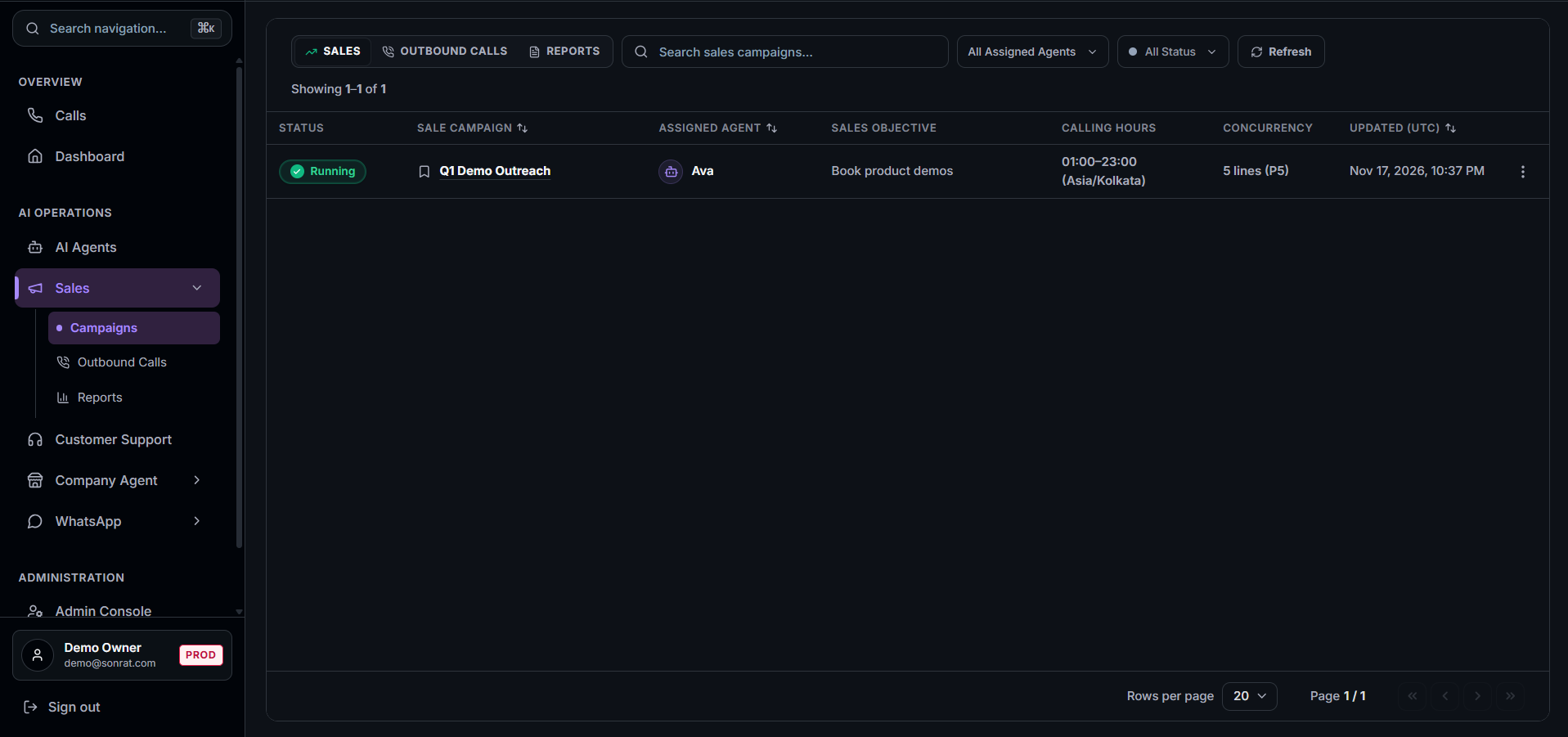
Check calling hours, the assigned agent, the contact list, and the workflow’s stopping conditions. Review the resulting records before deciding whether to increase volume. More calls do not make an unclear workflow more useful.
Sonrat.ai’s public campaign screen is a demo showing campaign status, an assigned agent, a sales objective, and calling hours. It is not evidence of a conversion rate. Confirm the controls and integrations available for your account before planning a campaign.